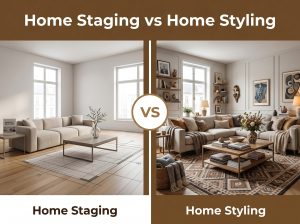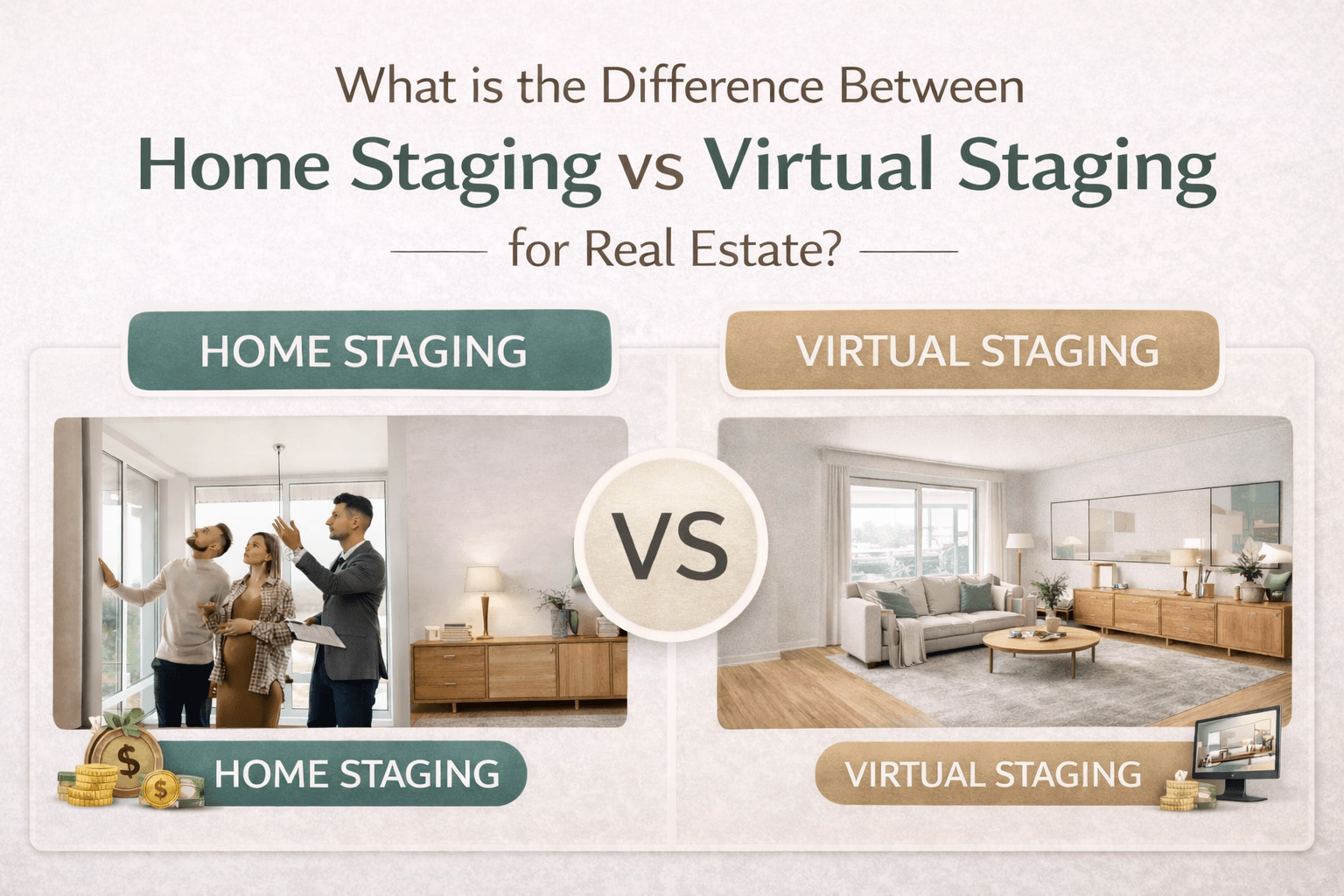
When a property is listed for sale, the first impression becomes very important. Most buyers decide quickly after seeing a home, either online or during a visit. This is why the topic of home staging vs virtual staging is very important in real estate today.
Both methods are used to make a property look attractive. Both help in getting more attention from buyers. But they work in very different ways.
Home staging and virtual staging are two popular strategies used to make properties more appealing to buyers. Traditional home staging involves physically furnishing and styling a space to enhance its in-person presentation, while virtual staging uses digital tools to add furniture and decor to property photos. If you want a cost-effective and fast solution for online listings, virtual staging is ideal; however, if your goal is to create a strong emotional connection during physical showings, traditional home staging is often the better choice.
What is Home Staging or "Traditional Staging"?
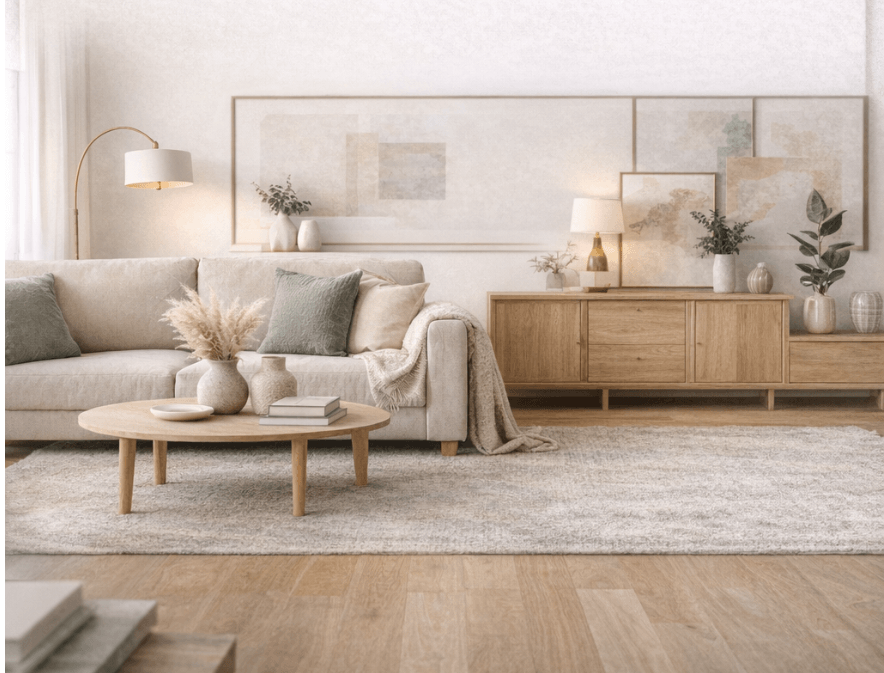
Home staging is the process of preparing a property using real furniture and decor. Everything is physically placed inside the home to make it look clean, modern, and ready to live in.
This includes arranging sofas, beds, lights, curtains, and small decor items. The goal is to show buyers how the space can be used in real life.
When buyers visit a staged home, they can feel the space. They can understand the size of rooms, the layout, and how furniture fits. This creates a strong emotional connection, which is very important in property buying decisions.
What is Virtual Staging (Digital Staging)?
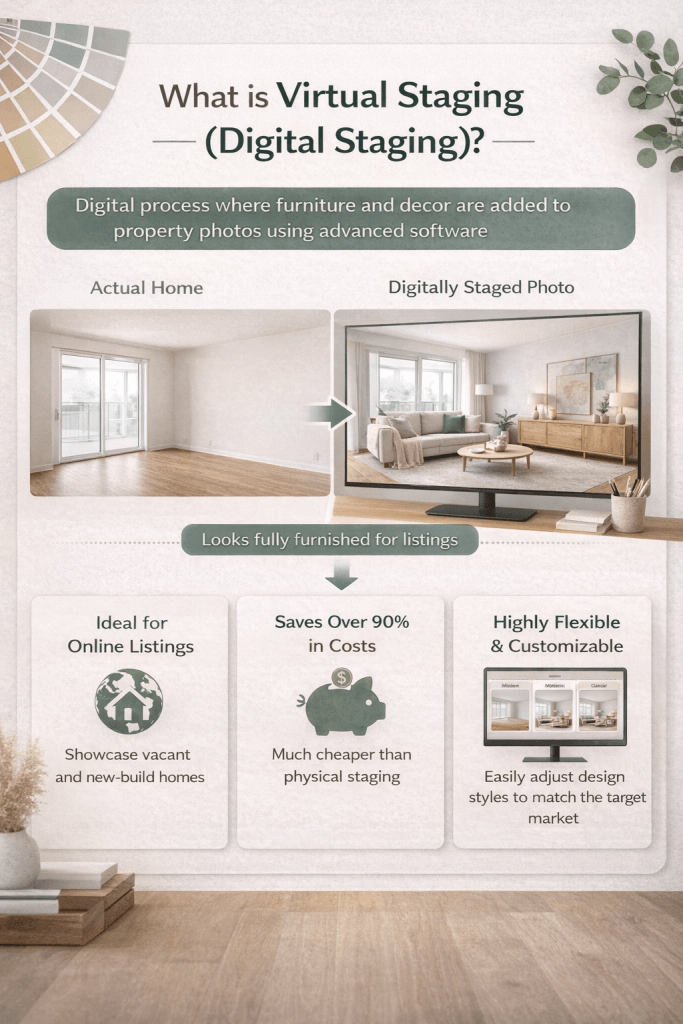
Virtual staging, also known as digital staging, is a digital process where furniture and decor are added to property images using advanced software. The actual home remains empty or minimally furnished properties but the photos look fully furnished.
This method is widely used in virtual staging real estate marketing, especially to help for online listings, as it helps showcase the true potential of a space without the need for physical furniture.
It is particularly useful for vacant properties, new-build homes, and houses with outdated or old furniture.
Virtual staging is a fast, cost-effective alternative, costing over 90% less than physical staging, and highly flexible. A single room can be styled in multiple ways, such as modern, classic, or minimal, to match different buyer preferences.
Home Staging vs Virtual Staging: Key Differences
| Factor | Home Staging | Virtual Staging |
|---|---|---|
| Setup | Real furniture and decor | Digital furniture in images |
| Experience | Physical | Real & emotional | Only visual in photos |
| Cost | Higher investment | Budget-friendly |
| Time | Takes days/weeks | Done in hours |
| Flexibility | Limited | Easy to change styles |
| Buyer Trust and Expectation | Matches actual visit | May differ from reality |
| ROI Impact | High conversion | High visibility |
This table clearly explains the home staging vs virtual staging comparison in a simple way.
Home Staging and Styling Experts in Melbourne | Stage2sell
Looking to sell your home fast and achieve the highest possible sale price? At Stage2Sell, we specialise in home staging in Melbourne, transforming properties into stunning, market-ready spaces that attract serious buyers and leave a lasting impression.
How Much Does Home Staging
Physical home staging can range from around $1,000 to $5,000 or more. For an average room cost of $200 to $800, for information read our blog: The Cost of Home Staging: Is It Worth the Investment?
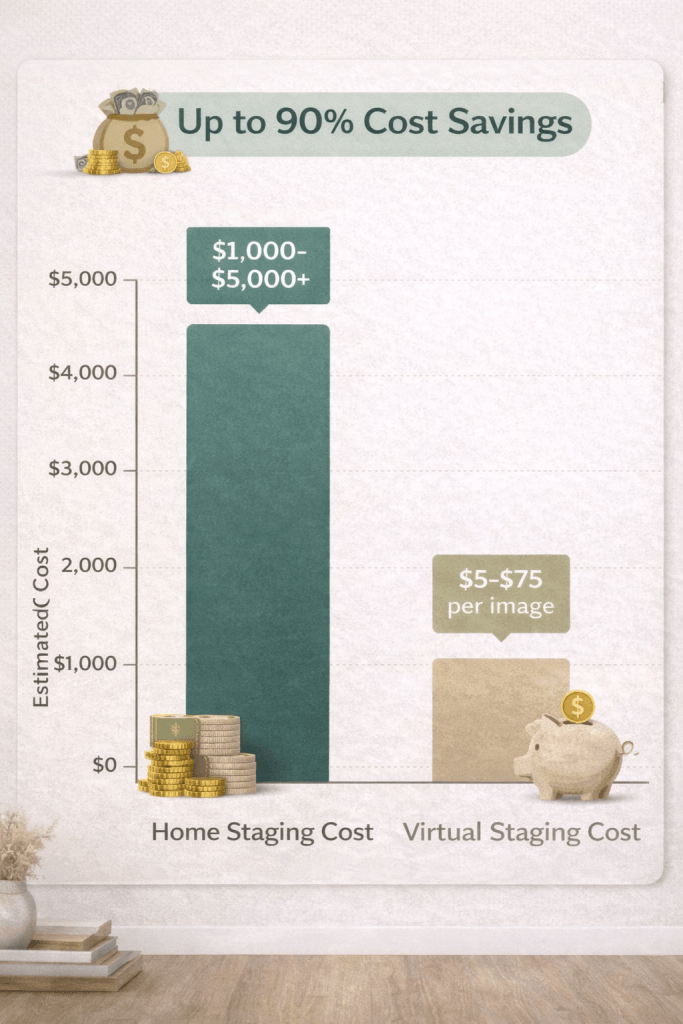
Virtual staging typically costs $5–$75 per photo ($15–$150+ total). Virtual staging is much more affordable. It only requires editing property images using digital tools, and pricing is usually charged per image. This makes virtual staging vs real staging cost significantly lower, often up to 90% cheaper than physical staging.
However, cost should not be the only factor. The real impact comes from how buyers react.
Difference Between Home Staging vs Virtual Staging ROI
While virtual staging saves money, home staging often delivers a stronger return in terms of buyer response. Properties that are properly staged tend to attract more interest and sell faster. Industry data suggests that staged homes can sell up to 70% faster than non-staged properties.
This means that although home staging requires a higher upfront investment, it can lead to quicker sales and potentially better offers. Virtual staging, on the other hand, improves online visibility and helps generate initial buyer interest at a lower cost.
Buyer Experience and Trust
One of the most important parts of home staging vs virtual staging is how buyers feel when they see the property.
With home staging, what buyers see online is exactly what they experience during the visit. This builds trust. It also helps them imagine living in the space.
With virtual house staging, the experience is limited to images. When buyers visit the property and find it empty, the experience may feel different. This gap can sometimes reduce interest.
This is why real staging is often used when physical visits are expected.
When to Use Home Staging
Home staging is a better choice in situations where:
- The property is ready for sale
- Buyers will visit in person
- The goal is to create a premium impression
- The property is high-value
It works best when you want to create a strong emotional impact.
Read Related Blog: Why Real Estate Agents Recommend Home Staging
When to Use Virtual Staging
Virtual staging works well when:
- The property is empty or under construction
- You need quick images for online listing
- Budget is limited
- You want to try different design styles
It is a smart solution for digital marketing and early promotion.
Examples
To understand virtual home staging vs real staging clearly, think about these situations:
- A ready apartment is styled with real furniture so that buyers can walk in and feel the space. This is home staging.
- An empty property is shown online with digitally added furniture to attract buyers. This is virtual staging.
Both methods aim to improve presentation, but the experience they offer is very different.
Advantages and Disadvantages of Home Staging vs Virtual Staging
Understanding the pros and cons of home staging vs virtual staging helps sellers choose the right strategy based on budget, timeline, and buyer expectations.
Home Staging Advantages
- Real experience for buyers
- Strong emotional connection
- Helps buyers understand space, layout, and functionality
- Builds trust because what buyers see matches reality
- Can justify higher asking prices for premium properties
Home Staging Disadvantages
- High cost due to furniture rental, labor, and logistics
- Time-consuming setup process (can take days or weeks)
- Requires coordination of delivery, installation, and removal
- Limited flexibility once the staging is complete
- Ongoing costs if the property takes longer to sell
Virtual Staging Advantages
- Much more affordable than traditional home staging
- Fast turnaround time (usually 24–48 hours)
- Allows multiple design styles for the same room
- Ideal for online listings and digital marketing
Virtual Staging Disadvantages
- No real-life experience during property visits
- Buyers may feel disappointed if the home is empty in reality
- Risk of mismatch between photos and actual property condition
- Requires clear disclosure to avoid misleading buyers
- Less effective for high-end or luxury property presentations
Which One Should You Choose?
The choice depends on your goal.
If your focus is on strong physical presentation and buyer visits, home staging is the better option.
If your focus is on online visibility and quick marketing, virtual staging real estate is a good choice.
In many cases, using both methods together gives the best results. Virtual staging attracts buyers online, and home staging converts that interest during visits.
Conclusion
The concept of home staging vs virtual staging is simple but very important in real estate.
Home staging creates a real and physical experience.
Virtual staging improves how a property looks in images.
Both have their own value. The right choice depends on your budget, timeline, and selling plan.
A balanced approach often works best. Strong visuals online and a well-presented space in real life can make a big difference.
This is the approach followed by Stage2Sell Property Styling Melbourne, where properties are styled with the right furniture, decor, and visual planning to attract buyers and improve overall value.
Frequently Asked Questions
Virtual staging is effective for online listings and marketing. It helps attract buyers through images. However, home staging is more effective during physical visits because buyers can see and feel the space. Both play different roles in virtual home staging vs real staging.
Yes, if not done properly, virtual staging can create a gap between photos and the real property. Buyers may expect a furnished space but find it empty during the visit. This is why transparency is important in virtual staging real estate.
Yes, many sellers use both methods. Virtual staging is used for online promotion, and home staging is used for physical visits. This combined approach improves buyer interest and gives better results in home staging vs virtual staging strategies.
Virtual staging is not always free. Some AI tools offer limited free trials, but most professional virtual staging services charge per image or require a subscription for high-quality results.
Another name for home staging is property staging or real estate staging, which refers to preparing a home to make it more attractive to buyers.
Yes, you can do virtual staging yourself using online tools or AI software. However, professional services usually provide more realistic and high-quality results.
Yes, virtual staging is legitimate and widely used in real estate marketing. It is considered ethical as long as images are clearly labeled and not misleading to buyers.
Get In Touch
We’re always happy to help
Stage2Sell Property Styling Melbourne
Call us
Let’s talk +61 4 1710 5615
Unit 1/9 Darbyshire Rd, Mount Waverley VIC 3149, Australia
Our Website : https://www.stage2sell.com.au/