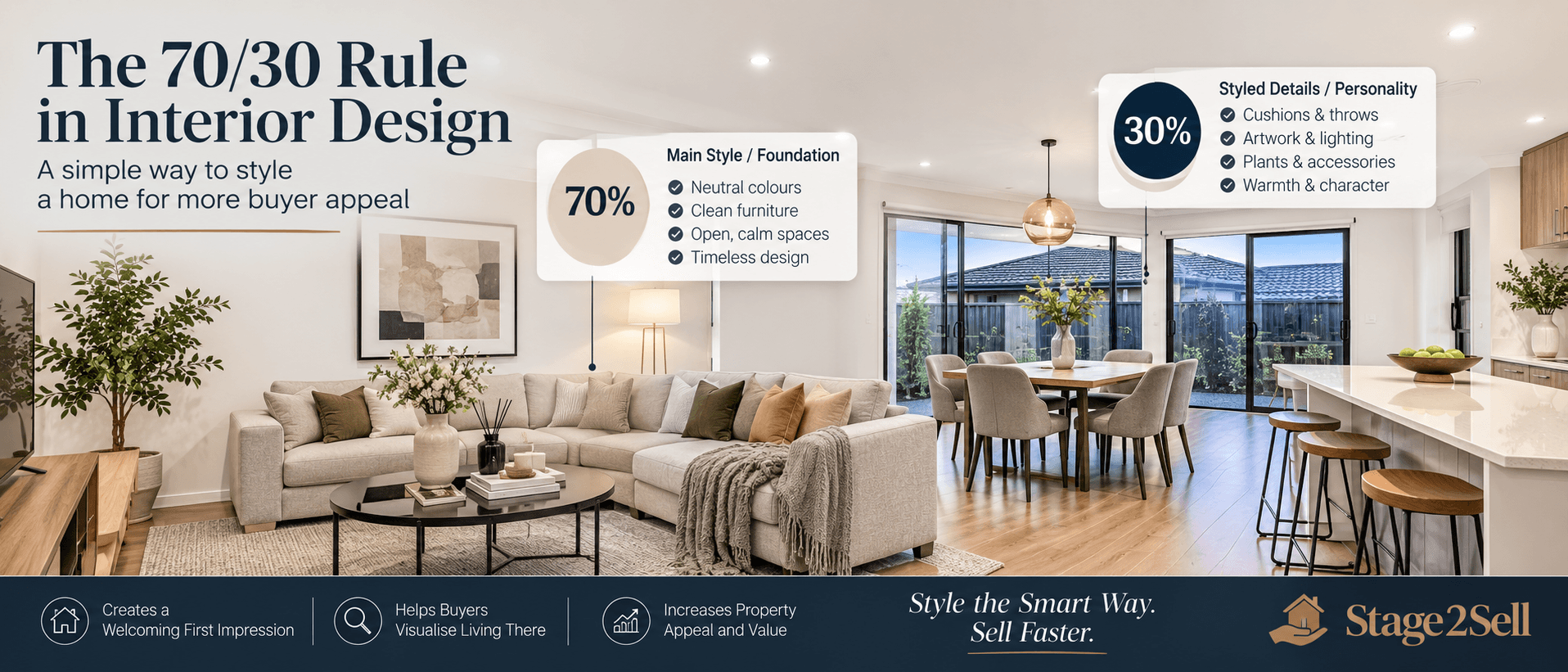
A well-staged home should feel calm, attractive, and easy to understand. Buyers should be able to enter a room and quickly see how the space can be used. However, a room that looks too plain may feel cold, while a room with too many colours or decorations can feel busy. This is where the 70/30 rule in interior design becomes useful.
The rule creates a clear main style while leaving enough space for contrast and personality. It is simple, flexible, and helpful when preparing a property for sale.
What Is the 70/30 Rule in Interior Design?
The 70/30 rule in interior design means that around 70% of a room follows one main design direction. The remaining 30% brings in a different style, colour, texture, shape, or detail. The larger part creates order, while the smaller part adds interest.
Designers generally use this split as a helpful guide rather than measuring every item exactly.
For example, neutral walls and simple furniture may form the main 70%, while cushions, artwork, lighting, and plants create the final 30%.
Why Does It Work for Home Staging?
The purpose of home staging and styling is not to display the seller’s personal taste. It is to help different buyers feel comfortable in the property. A clear design makes each room easier to understand and helps people imagine living there.
The 70% creates a safe and welcoming base. Neutral colours, clean furniture, simple shapes, and open layouts often work well because they do not distract buyers from the property.
The remaining 30% gives the room warmth. It may include artwork, lamps, cushions, throws, mirrors, or greenery. These details can make a space feel complete without taking attention away from its size, natural light, and important features.
Begin With the Main 70%
The first step is to choose the main look for the room. For staging, it should usually be simple, fresh, and suitable for the type of property.
A modern apartment may use slim furniture and light timber, while a family home may need warmer seating and natural fabrics.
The main 70% usually includes wall colours, flooring, large furniture, rugs, curtains, the room layout, and the main materials. These items take up the most visual space, so they should work together and create one clear mood.
Professional home staging also considers the size of each item. A large sofa in a small room can make the area feel tight. Furniture that is too small may make a large room look empty.
Using furniture of the right size helps the room feel open, comfortable, and practical. It also allows buyers to understand how they could use the space after moving in.
Add Interest With the Final 30%
Once the main design is ready, the final 30% can bring the room to life. This is where colour, pattern, texture, and character can appear.
A neutral bedroom may be finished with dark bedside lamps, green cushions, framed artwork, and a textured throw. A simple dining area may use a pendant light, an attractive table setting, a mirror, and a vase.
Useful styling products can include:
- Cushions and throws
- Artwork and mirrors
- Table lamps and floor lamps
- Plants and decorative pots
- Books, trays, and small accessories
- Bed linen and towels
- Rugs and curtains
- Outdoor furniture and accessories
The goal is not to fill every empty surface. Each product should support the room and guide the buyer’s attention towards its strongest features.
Using the Rule in Different Rooms
In the living room, the sofa, rug, coffee table, and neutral walls may form the 70%. Cushions, lighting, artwork, and plants can create the remaining 30%.
In the bedroom, the bed and main colour palette can lead, while linen, lamps, and wall art finish the space.
The same idea can be used in the dining area. The table and chairs may create the main base, while a pendant light, table setting, artwork, or decorative vase adds interest.
Outdoor areas can also follow the rule. Seating and a clear layout may form the main part, while cushions, plants, lanterns, and a small side table add comfort and warmth.
Common Mistakes to Avoid
One common mistake is allowing the 30% to become too strong. Too many bright colours, large artworks, or mixed patterns can make a room look smaller and less peaceful.
Another mistake is making the 70% too plain. A room with only beige furniture and empty walls may feel unfinished. Buyers still need warmth and a sense of lifestyle.
It is also important not to use the same styling plan in every property. An apartment, townhouse, family home, and luxury residence may need different furniture and accessories.
Experienced home staging experts Melbourne should consider the property’s size, architecture, location, likely buyers, and price range before choosing the main design direction.
The staging should suit the home rather than simply following the latest interior trend.
Choosing the Right Staging Package
Not every home needs the same amount of support. A vacant property may need complete furniture, artwork, accessories, bedroom styling, and outdoor pieces. An occupied home may only require selected products to improve its existing setup.
Full, partial, and premium staging options can help sellers choose a service that suits their property and budget. These packages may cover living areas, bedrooms, bathrooms, and outdoor zones using carefully selected furniture, artwork, and accessories.
Partial staging may use some of the owner’s existing furniture and add new products where needed. Full staging can create a complete look inside a vacant home. Premium staging may use more luxurious furniture, statement artwork, and detailed accessories for high-end properties.
This makes property styling Melbourne more practical because the plan can be built around the home instead of using the same furniture and design everywhere.
Conclusion
The 70/30 rule in interior design is a simple way to create rooms that feel clear, balanced, and welcoming. The main 70% gives the space order, while the final 30% adds colour, texture, contrast, and life.
With suitable furniture, artwork, lighting, rugs, cushions, and accessories, this rule can help buyers notice the strongest parts of a property without feeling distracted by too much decoration.
For sellers seeking professional support, Stage2Sell offers tailored full, partial, and premium staging options for Melbourne homes. Its team uses selected furniture, artwork, and accessories to create polished, market-ready spaces that help potential buyers connect with the property.
Frequently Asked Questions
The 70/30 rule in interior design means using one main style, colour, or design direction for 70% of a room. The remaining 30% is used for contrast through cushions, artwork, lamps, plants, textures, or decorative accessories.
The rule helps create rooms that look balanced and welcoming. In home staging and styling, the main 70% keeps the space simple, while the final 30% adds warmth and personality without making the room feel cluttered.
The main 70% usually includes walls, flooring, large furniture, rugs, curtains, and the overall room layout. During professional home staging, these elements should follow one clear colour palette and design style.
Yes, the rule can be used in living rooms, bedrooms, dining areas, kitchens, and outdoor spaces. Experienced home staging experts Melbourne can adjust the balance according to the room’s size, purpose, and strongest features.
You can try the rule yourself, but professional support can create a more polished result. A team specialising in property styling Melbourne can select suitable furniture, artwork, lighting, and accessories based on your home and target buyers.