Selling a home is not only about putting it online and waiting for buyers. The way a property looks can affect how people feel about it. A clean, bright, and well-arranged home often creates more interest than an empty or poorly presented property.
This is where home staging and styling become helpful. These two terms are often used together, but they are not exactly the same. Both improve the appearance of a home, but their goals and methods can be different.
Understanding home staging vs styling can help homeowners choose the right service before selling or updating their property.
What is Home Staging?
Home staging is the process of preparing a property for sale. Its main purpose is to make the home attractive to as many potential buyers as possible.
A home stager looks at the property through the eyes of a buyer. They may suggest removing personal photos, clearing extra items, moving furniture, or adding hired furniture and décor.
The goal is not to show the current owner’s personal taste. The aim is to create a welcoming home where buyers can imagine themselves living.
Home staging may include:
- Hiring furniture for empty rooms
- Replacing old or unsuitable furniture
- Adding sofas, beds, dining tables, and chairs
- Using rugs, lamps, cushions, and artwork
- Improving the movement between rooms
- Giving every room a clear purpose
- Removing personal and unnecessary items
- Making rooms look larger and brighter
For example, an empty spare room may look too small or may not have a clear purpose. A home stager can add a desk, chair, lamp, and simple décor to show that the room can be used as a home office.
What is Property Styling?
Property styling focuses more on the overall design and feel of a home. It involves selecting furniture, colours, artwork, textures, lighting, and decorative pieces that look good together.
Styling may be done before selling a property, but it can also be used by people who plan to continue living in their home.
A stylist may help create a certain look, such as modern, warm, coastal, simple, classic, or luxurious. The design may reflect the homeowner’s lifestyle and personal taste.
Property styling may include:
- Choosing furniture and accessories
- Selecting matching colours
- Adding artwork and mirrors
- Arranging plants, books, and décor
- Improving room lighting
- Selecting cushions, curtains, and bedding
- Creating a balanced and finished look
- Updating one room or the entire home
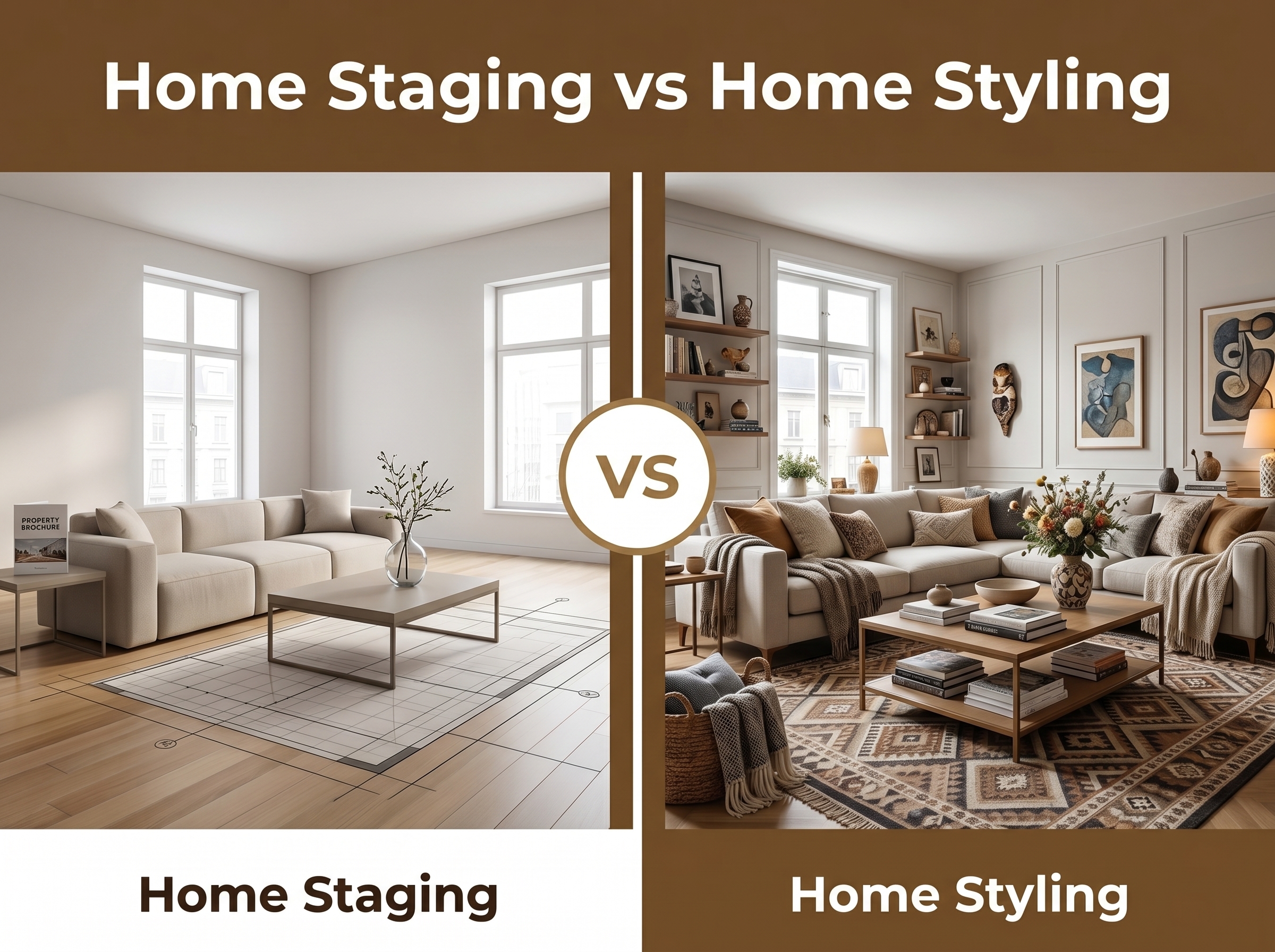
Property styling can be more personal because it may focus on what the owner likes. Home staging mainly focuses on what future buyers may find attractive.
Home Staging vs Styling: What Is the Main Difference?
The main difference in home staging vs styling is the final purpose.
Home staging is mostly used to help sell a property. Every choice is made to attract buyers, improve listing photos, and present the property in its best condition.
Home styling focuses more on beauty, comfort, and personal taste. It helps create a home that suits the person living there.
For example, a homeowner may love bright colours, large family photos, and bold furniture. A property stylist may use these elements to create a personal design. However, a home stager may choose softer colours, simple artwork, and neutral furniture because these options can appeal to more people.
Home staging is not mainly about personal expression. It is about helping buyers connect with the property.
How Does Home Staging Help Sell a Home?
Buyers often form an opinion quickly. Many people first see a home through online listing photos. If the photos look dark, empty, crowded, or untidy, they may decide not to visit the property.
Professional home staging and styling can make rooms look brighter, cleaner, and more welcoming. Furniture also helps buyers understand the size and layout of each space.
An empty living room may feel cold and difficult to understand. Buyers may not know where a sofa or dining table will fit. When the room includes a sofa, rug, coffee table, lamp, and artwork, it becomes easier to imagine daily life there.
Staging can also help reduce attention on small weaknesses. A narrow room can feel more balanced with the right furniture. A dark corner may look brighter with a lamp or mirror. A small outdoor area can feel useful when it includes a table, chairs, and plants.
Good staging helps buyers see more than walls and floors. It helps them imagine relaxing, eating meals, working from home, or spending time with family.
Does Every Room Need to Be Staged?
Not every room needs a large amount of furniture or décor. However, the main areas should usually receive the most attention.
These may include:
- The living room
- The kitchen
- The dining area
- The main bedroom
- The entrance
- Outdoor areas
These spaces often create the strongest first impression.
Smaller rooms can also be presented with a few simple products. A small bedroom may only need a bed, bedside table, lamp, and artwork. A balcony may look more attractive with a compact table, two chairs, and a plant.
The aim is to show how each area can be used without making the property feel crowded.
Can Existing Furniture Be Used?
Yes, existing furniture can often be used during the staging process. A professional can review the items already in the property and decide what should stay, what should be moved, and what should be removed.
Some homes only need partial staging. This means a mix of the homeowner’s furniture and hired products is used.
For example, the owner’s dining table may remain, while modern chairs, artwork, a rug, and table décor are added. In a bedroom, the existing bed may be used with fresh bedding, cushions, lamps, and bedside tables.
Partial staging can be a practical choice when the home already has useful furniture but needs a fresher and more complete appearance.
What Is Full Home Staging?
Full staging is usually used for an empty property. Furniture and accessories are brought into the home to make it look complete and ready to live in.
The products may include:
- Sofas and armchairs
- Dining tables and chairs
- Beds and mattresses
- Bedside tables
- Desks and office chairs
- Outdoor furniture
- Rugs and mirrors
- Lamps and artwork
- Cushions and throws
- Plants and decorative items
Empty homes can feel cold and smaller than they are. Buyers may also struggle to judge the size of each room.
Full staging adds warmth and gives every room a clear use. It can also help make professional property photos more attractive.
Which Service Should You Choose?
The right choice depends on your goal.
Choose home styling when you want to improve your home for your own comfort, lifestyle, and personal taste. It is suitable when you plan to stay in the property and want a more beautiful or updated interior.
Choose home staging when you are preparing a property for sale. It focuses on buyer interest, property presentation, and the local market.
In some cases, the two services overlap. A home may need strong design choices while also being prepared for sale. This is why home staging and styling are often discussed together.
Conclusion
The difference between home staging and styling mainly comes down to purpose. Styling creates a home that reflects the owner’s taste, while staging prepares a property to attract potential buyers.
Both may use furniture, artwork, rugs, lamps, cushions, bedding, mirrors, and décor. However, each item is selected for a different reason.
When preparing a Melbourne property for sale, Stage2Sell can help create a welcoming and well-presented home through carefully chosen furniture, practical layouts, and attractive styling products.
Frequently Asked Questions
Home staging prepares a property for sale and focuses on attracting buyers. Home styling improves the home’s appearance based on the owner’s taste and lifestyle.
No. Home staging can be used for both empty and occupied homes. Existing furniture may be rearranged, removed, or combined with hired furniture and décor.
Yes. Full or partial furniture packages may include sofas, beds, dining tables, rugs, artwork, lamps, cushions, mirrors, plants, and outdoor furniture.
The right furniture size, layout, lighting, colours, and accessories can make a small room feel more open, balanced, and easier to understand.
Choose home staging when preparing your property for sale. Choose property styling when you want to improve your home for personal comfort and everyday living.